 Lists
Lists Lists
ListsAs photogrammetry software like Polycam, 3D scanning techniques continue to develop
and become increasingly democratized, they facilitate public engagement in collective
archive-making. The content and character of these public archives, however, reveal a
peculiar amalgamation of drastically different kinds of archive-making strategies: on one
hand, individual oriented practices akin to those typical for family photo albums; on the other
hand, and scientific research-oriented documentation.
The article will examine the specifics of these amalgamations through analysing the issues
of digital mistakes in heritage-making, the narratives of the digital 3D objects and their
(dis)embodiments, and the interplay of absences and presence in digital archives. It will also
attempt to take an initial approach in examining the 3D vision ideologies underpinning the
depictions of digital bodies as captured by accessible photogrammetry software like
Polycam.
Focusing on a public online archive of a public online archive of 3D documented objects and
locations made using Polycam, the paper suggests that this archive is an ongoing,
collective, distributed, participatory process — what Annet Dekker calls a ‘living archive’
(2017), which is underpinned by a consumerist logic of cultural production with militaristic and
pornographic undertones, thus presenting a blend of institutional and individual gaze as
mediated by 3D scanning technology.


 |
Recently added
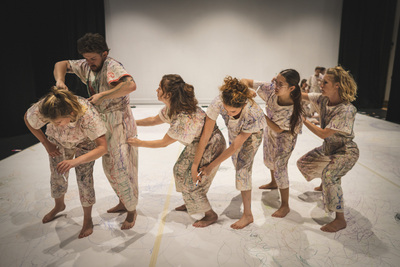
Keeley, Adele and Hubbard, Jenna (2024) The Moving Canvas Project: exploring choreography and disobedient drawing.
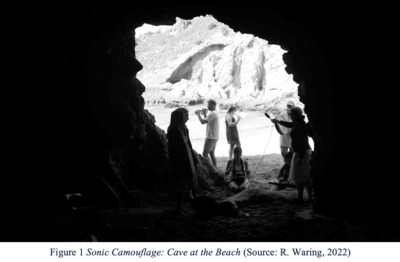
Waring, Richard (2024) Microcultures of collaboration: entangled artistic pedagogies for students and educator.

Manwaring, Kevan (2025) The Ecological Imaginary in Literature and Other Media: The Nature of Fantasy.