 Lists
Lists Lists
ListsDominant techno-futurist narratives in education foreground AI, automation and optimisation, casting technological progress as a pathway to efficiency and measurable improvement. This article examines an alternative, relational techno-future through the development of voxUp, a custom beatbox looper designed with and for a UK special education (SEN) school. Rather than pursuing automation or standardisation, the project explores how accessible music technologies can support creative agency and shared authorship through real-time, embodied sound-making. Methodologically, the study draws on observations of classroom sessions, educator interviews, and co-design workshops, conducted through institutional mediation,
to move towards a working prototype of an adaptive, multi-channel looping interface.
Guided by critical disability technoscience and science and technology studies, the analysis identifies five interconnected themes: (1)
socio-technical landscapes of music-making within SEN settings; (2) sensory–motor attunement and embodied timing; (3) accessibility frictions and barriers to sustained use; (4) creative ownership and micro-agency; and (5) relational atmospheres and shared attention. Together, these themes show how music technology mediated forms of
sensory reciprocity and emergent agency, enabling inclusive participation in musical experimentation. The design process demonstrates the value of slow, locally embedded, knowing-making over market-driven EdTech imaginaries. By resisting the prevailing AI-centred paradigm, voxUp offers a situated, care-based counter-narrative to dominant educational techno-futures, illustrating how assistive music technologies can be made customisable, repairable and responsive to diverse bodyminds.
The article contributes to debates on culturally specific techno-futures by showing how creative, disability-informed design practices in nonprofit educational contexts can reconfigure participation and challenge normative assumptions about ability, authorship and technological design progress.


 |
Recently added
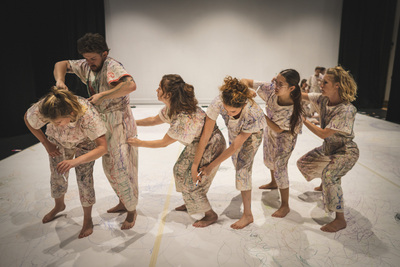
Keeley, Adele and Hubbard, Jenna (2024) The Moving Canvas Project: exploring choreography and disobedient drawing.
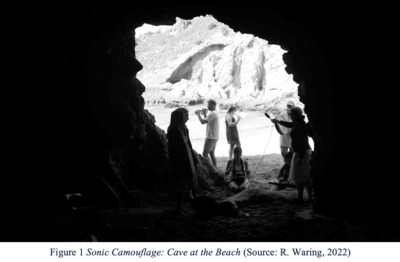
Waring, Richard (2024) Microcultures of collaboration: entangled artistic pedagogies for students and educator.


Manwaring, Kevan (2025) The Ecological Imaginary in Literature and Other Media: The Nature of Fantasy.