



 Lists
Lists Lists
ListsWooden boatbuilding demonstrates qualities required for more sustainable futures, including human-centred values embedded in local communities, situated making, repair cultures, and material stewardship shaped by marine environments. This paper uses a case study of Lyme Regis, Dorset, UK, to examine boatbuilding as a form of peripheral design and to show how peripherality shapes the potential for sustainable transition under a glass-reinforced plastic (GRP)-dominated boatbuilding regime. Drawing on semi-structured expert interviews with local boatbuilders and evidence from the Stria5 pilot project, the paper analyses peripherality across three dimensions: social organisation, making practices, and design economy, in order to identify where hybrid innovation can be integrated without eroding craft knowledge. The findings show that opportunities for hybridisation can be introduced through propulsion and system integration, digital-to-hand workflows, and accredited material choices, while viability remains constrained by skills reproduction, material supply, regulatory requirements, and GRP-normalised market expectations. The paper demonstrates the value of peripheral design as a framework for understanding sustainable design practice within marginalised design ecosystems, and shows how design-for-planet principles can support the development of a viable contemporary product in this context.


 |
Recently added
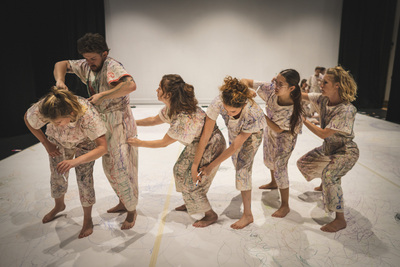
Keeley, Adele and Hubbard, Jenna (2024) The Moving Canvas Project: exploring choreography and disobedient drawing.

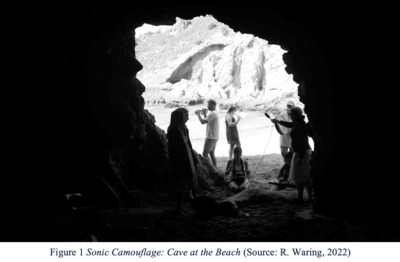
Waring, Richard (2024) Microcultures of collaboration: entangled artistic pedagogies for students and educator.



Manwaring, Kevan (2025) The Ecological Imaginary in Literature and Other Media: The Nature of Fantasy.
