Lists
 Lists
This paper examines a thirty-year collection of Dyson upright vacuum cleaners as a tangible archive and considers how designed objects contribute to the construction of historical knowledge. Eighteen UK vacuum cleaner models spanning 1993 to 2023 were examined through photographic documentation and comparative object analysis. A focused comparison was undertaken between a post-consumer DC01 and an unused DC01 held by the Museum of Design in Plastics (MoDiP), followed by teardown of the post-consumer example. Patent material associated with the development of the Dyson Ball was also examined alongside the commercialized product lineage. The physical lineage records continuity and change across successive products, while the patents provide a partial documentary record of design development. Comparison of the two DC01s shows how substantially the same design can acquire different material histories through preservation, use, repair and ageing. These different trajectories preserve different forms of historical evidence. Across the wider lineage, successive product development also overlaps with the continuing lives of earlier objects, producing a more complex temporal history than a sequence of product introductions alone. The paper argues that bringing separately surviving objects into comparison as a tangible archive creates relationships that are not available through individual objects, museum collections or documentary sources alone. Examined as a collection, the product lineage allows changes across successive designs to be distinguished from changes accumulated by individual machines, the tangible archive collection records both the development of the Dyson upright and the subsequent lives through which its designs became available as historical evidence.


 |
Recently added
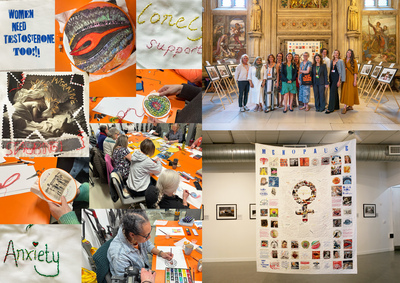
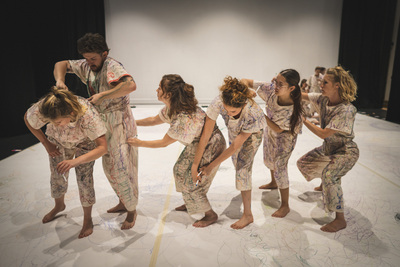
Keeley, Adele and Hubbard, Jenna (2024) The Moving Canvas Project: exploring choreography and disobedient drawing.
Waring, Richard (2024) Microcultures of collaboration: entangled artistic pedagogies for students and educator.